FINALIST FOR THE MAN BOOKER INTERNATIONAL PRIZE 2013 (winner announced 22nd May 2013)
SHORTLISTED FOR THE INDEPENDENT FOREIGN FICTION PRIZE 2012
SHORTLISTED FOR THE MAN ASIAN LITERARY PRIZE 2011
LONGLISTED FOR THE PRINCIPE DE ASTURIAS PRIZE FOR LETTERS 2011

WINNER OF THE LAO SHE LITERATURE AWARD in 2004
WINNER OF THE LU XUN AWARD IN 1997
SELECTED AS 'BEST FICTION BOOKS OF 2012' by KIRKUS
SELECTED AS 'BEST BOOKS OF 2012' by THE NEW YORKER
SELECTED AS 'NEW YORK TIMES EDITORS' CHOICE'
SELECTED AS 'BEST BOOKS OF 2012' BY MACLEAN'S
'A satirical masterpiece.' Kirkus Reviews
'Lenin's Kisses is a grand comic novel, wild in spirit and inventive in technique. It's a rhapsody that blends the imaginary with the real, raves about the absurd and the truthful, inspires both laughter and tears. Carlos Rojas's translation captures the vigor of the original, funny, poised, peculiar but always rational. The publication of this magnificent work in English should be an occasion for celebration.' Ha Jin, author of Waiting and Nanjing Requiem
'A masterpiece on many levels, most pertinently literary. It is crafted in the most lyrical prose style, and in an intimate voice filled with poetic flourishes and narrative craftsmanship. This is a tale of modern China with all its wonders, marvels and absurdities and ironies roped together, making it a must-read. It's little wonder that the author has won both China's equivalences of the National Book Award and the Pulitzer Prize. And this book is the finest gem to reflect this man's gift.' Da Chen, author of My Last Empress
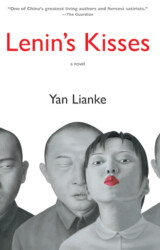
In the village of Liven, on a day in the middle of a sweltering summer, it suddenly begins to snow, a hot snow that falls for seven days-seven long days that not only transform summer into winter but that forever disrupt the balance of life there. This mystifying climatic incongruity begins the award-winning novel Lenin's Kisses, an absurdist masterpiece that melds fable, history, and satire in an enthralling tragicomedy set in modern day China.
Nestled deep within the Balou mountains, by and large spared from the government's watchful eye, the people of Liven enjoy harmonious days filled with enough food and enough leisure to be fully content. But when their crops are obliterated by an unseasonal snowstorm, and with it their means of earning an income, a county official arrives with a lucrative scheme to not only raise money for the district, but to boost his career as well. He convinces the village to start a travelling act showcasing their talents, which are unlike anything he has ever witnessed. The majority of the one hundred and ninety-seven villagers are disabled, and their skill sets include Blind Tonghua's acute listening, One-Eye's one-eyed needle threading, and Deafman Ma's firecrackers on the ear.
With the profits from this extraordinary show, the county official intends to buy Lenin's embalmed corpse from Russia-where it is slowly decaying from lack of upkeep-and install it in a grand mausoleum to attract tourism. In the ultimate marriage of capitalism and communism, such an incredible acquisition would not only benefit the inhabitants of Liven, but the entire region. No citizen of Liven would need to work again and an improved sense of harmony would exist. However, even the best intentions go astray, and the success of the Shuanghuai County Special-Skills Performance Troupe comes at a serious price.
Yan Lianke, one of China's most distinguished writers, whose works often push the envelope of his country's censorship system, delivers a humorous, daring, and riveting portrait of the trappings and consequences of greed and corruption at the heart of all humanity.
'Both a blistering satire and a bruising saga, this epic novel by Yan (Dream of Ding Village) examines the grinding forces of communism and capitalism, and the volatile zones where the two intersect... Yan boldly plunges into the psychic gap between China's decades-old conditioned response to communist doctrine and its redefinition of itself as a capitalist power, creating with bold, carnivalesque strokes a heartbreaking story of greed, corruption, and the dangers of utopia.' Publisher's Weekly
'Yan's novel expresses humanity's innate weakness, as well as the tragic condition of rushing headlong down a dead-end road in an attempt to extricate itself from an impossible situation. The work's depth lies in its ability to express an unbearable sorrow, even while constantly making the reader laugh out loud. We can hereby announce that China has published a truly miraculous novel.' Hong Kong Mingpao Weekly
‘The award-winning novelist Yan Lianke is one of China's most interesting writers and a master of imaginative satire. His work is animated by an affectionate loyalty to his peasant origins in the poverty-stricken province of Henan, and fierce anger over the political abuses of the regime. Lenin's Kisses is an absurdist historical allegory of the money-making fever that swept China after Deng Xiaoping opened up the Chinese economy in the 1990s. [Lianke] has advised writers to confront censorship with "art, not politics" [and] this innovative novel, with its wit, humanity and satire, sets a provocative example.’ The Guardian
'Yan at the peak of his absurdist powers. He writes in the spirit of the dissident writer Vladimir Voinovich, who observed that “reality and satire are the same.' Evan Osnos, in The New Yorker, best books of 2012
‘Lenin's Kisses mocks the way capitalist practices interweave with Communist ideology in China… Mr. Yan steers clear of depicting the world in simple good-evil dichotomies… "Lenin's Kisses" wickedly satirizes a sycophantic society where money and power are indiscriminately worshiped.’ Wall Street Journal
'A satirical masterpiece.' Kirkus Reviews
'Yan Lianke weaves a passionate satire of today's China, a marvelous circus where the one eyed-man is king... Brutal. And wickedly funny.' L'Express
'With its distinctive language, structure, and narrative approach, Lenin's Kisses presents a distinctive vision of 'rural China' and 'revolutionary China,' even while establishing a new literary 'native China'' Contemporary Literature Commentary
'An invigorating and inventive novel.' Le Magazine Littéraire
'Yan Lianke sees and describes his characters with great tenderness... this talented and sensitive writer exposes the absurdity of our time.' La Croix
'a beguiling storyteller.' Sunday Age, Australia
'Author Yan's deft satire, comic touches and his endless compassion bring smiles and tears through a journey that swings effortlessly back and forward between the absurd, the real and moments of magic... Here is a splendid storyteller in the tradition of Jonathan Swift. Yan's writing is masterful, his imagination and his satire soars above the common. VERDICT: ONE TO SAVOUR' Courier Mail, Australia
'Lianke has achieved acclaim abroad and censorship at home. While two of his novels have been banned in his native China, it clearly doesn't weigh heavily on him - as he again enters the bullring with this enthralling tale of his homeland, its people and those in power.' GQ Australia
‘The sheer, exuberant absurdism soon draws you in… yet, as it turns darker, and the ridiculous, flowery rhetoric of the Revolution is replaced by brutal, naked exploitation, you are reminded of the uncomfortable truth: that the absurdities that the Chinese people have lived through are as tragic and comic as anything a novelist can contrive.’ Weekend Herald, Auckland
'Lenin's Kisses thumbs its nose vigorously at some of the one-party state's pieties... Surprisingly, Lenin's Kisses actually won an official state prize in China. Yan Lianke has found a way of circumventing censorship by making his satire playful. His chapters and his copious end-notes are given alternate numbers only (1, 3, 5, 7 etc.) as a sly way of saying he had to leave out a lot... This leaves most of the book free to be raucous peasant farce. And that is the way it is best enjoyed.' Sunday Star Times, New Zealand
'Whimsical and horrifying by turns... a no-holds-barred satirical allegory of recent Chinese history.' Listener, New Zealand
‘This epic tragicomedy deftly satirises the exploitation of the Chinese people by greedy, power-hungry and inept officials. Yan Lianke showcases many talents of his own, including brilliant absurdist humour and self-censorship.’ North and South, New Zealand
'Yan Lianke maintains an utterly uncompromising stance. It's really a lazy pigeonholing to call this Chinese "magic realism". There is nothing magical about Yan Lianke's realism. And his realism won't leave you feeling you have ever had your feet on solid ground. It's better to think of categories like labyrinthine, or grotesque, or of satire mixed with sadism: the unflinching eye that nevertheless leaves you blinking with the whirling absurdities of the human condition.’ The Independent, UK
‘... his account of the final maltreatment of the villagers — at the glorious opening of Lenin’s new gold-and-marble mausoleum, after which the performers are robbed of the money they have earned, starved, beaten and raped — has a tragic power. InLenin’s Kisses,Yan Lianke movingly chronicles the price that Communist China’s rush to get rich has exacted from its vulnerable rural majority.’ The Spectator, UK
'Lianke’s lyrical prose, translated by Carlos Rojas, delivers a more profound meditation on the rank imperfections shared by all humans, no matter their physical fitness… he summons rare wonder: he manages to create a wretched, absurd and beautiful universe both brand-new and newly eternal.' MacLean’s Canada, best books of 2012
‘Yan Lianke’s novel is an enticing yet politically charged depiction of post-revolution Chinese society, combining the picaresque with cutting satire... the novel is both informative and entertaining, combining the fantastic with elegant cynicism. However, Lianke’s writing avoids bitterness, creating a beautiful work of fiction capable of standing alone beyond its place as an enticing satire.’ Welovethisbook.com/The Bookseller, UK
‘A rich, beautifully written, consistently surprising satire, Yan Lianke’s Lenin’s Kisses boasts an elaborate, engrossing plot with disarming twists and compelling characters both challenged and challenging. It leads the reader on a strange pilgrimage—often melancholy but certainly rewarding—through a China by turns traditional, modern, and fantastical.
Liven’s saga is both moving and gut-wrenching as well as mordantly, brutally, bitterly funny; it spares neither its characters nor its readers the multitudinous disasters of human folly. The novel is a veritable Chinese Box of absurd tribulations, each one containing its own Russian matryoshka doll. Lenin’s Kisses… offers an irresistible attraction for readers of powerful, uncompromising satire. So pucker up, buttercup.’ Three PerCent Magazine, USA
'Widely acclaimed in China – it won the Lao She award, a national literature prize – and now translated expertly into English for the first time by Carlos Rojas, this book explores the absurd contradictions of the country’s head-long drive towards hypercapitalist Market-Leninism and evinces a deep sympathy for the country’s long-suffering peasants… Yan’s narrative unwinds peculiarly, through irregular lists of footnotes, chronological oddities and intentionally missing chapters, serving to remind us of the suppressed historical traumas that echo through the novel in scattered, vivid memories of the Great Leap Forward and the Cultural Revolution.
In his angry 2012 article, Yan wrote that “ People live like dogs in this society. I dream of being able to bark out loud in my books, and of turning my barking into exquisite music.” This compelling, deeply felt novel might have achieved that unsettling aim.’ New Humanist, UK
‘Many contemporary Chinese writers — including recent Nobel Laureate Mo Yan — use the grotesque and the fantastical to portray the state of their nation. Yan is no exception, also employing a sometimes droll, sometimes cutting sarcasm. At one point in the novel, a character tells another, “You can see, and therefore you see the entire world as dirty. I can’t see, and therefore I see the entire world as pristine and pure.” Yan is definitely among those who can see.’ DNA India
‘this is a great state of the nation novel which deserves—and which, thanks to Carlos Rojas’s excellent translation, will hopefully find—a wide readership outside the borders of the country it so skillfully dissects.’ Asian Review of Books
‘Yan Lianke is one of China’s sharpest writers, his novels as satirical and pungently funny as some of Chinese contemporary art.Lenin’s Kisseshas an unbeatable premise. Lenin’s Kissesmight have unexpected resonance for readers in India.’ Business Standard, India
‘Reading this work requires physical participation of turning sections back and forth (e-reader not recommended) as Yan presents his nonlinear, multi-layered narrative in books, chapters, and essential endnotes – using only odd numbers. Notes Rojas: “[T]he work’s discontinuous numbering expresses the tragic sentiment of the novel as a whole (since in China odd numbers are considered inauspicious).”
Verdict: Sprawling, comical, and calamitous, Kisses is not for the faint-hearted (humanity rarely fares well in Yan’s fiction) or the impatient. Diligent readers will be richly rewarded.’ BookDragon, Smithsonian Asian Pacific American Centre
‘much of it will secure your enjoyment. All of it deserves your attention.’ The National, UAE
‘Yan Lianke's 2004 novel, Lenin's Kisses, newly and beautifully translated by Carlos Rojas, is a rare and fascinating example, not just of Chinese fiction from a writer living and working in China, but also a book that has won literary awards (the prestigious ChineseLao She Literary Award), now available in English.’ The Bookbag, UK
‘The final force of Lenin’s Kisses rests in its demonstration of the possibility of faith, even in disaster, but a faith mediated by the novel’s relentless suspicion of the world beyond the village, whose avatar, Grandma Mao Zhi, is the story’s only hero.’ Publicbooks, US
Editions Philippe Picquier France
Chunfeng Art and Literature Press China
Font Forlag Norway
Riva Bulgaria
Text Australia
Grove Atlantic USA
Chatto & Windus UK
Tiderne Skifter Denmark
Editura Allfa Romania
Eichborn Germany
Material: Chinese, French and English editions (544pp).

Four Books - whose title refers both to the four "canons" of Confucianism and the four Gospels - is a strong work of violent, shocking, alternating voices that tell the story of the creation of a world, and what a nightmare that was. The three years of the "Great Leap Forward" imagined by Mao, from 1959 to 1961, cost the lives of more than thirty-six million people. Four ways of narrating the madness of men, four tones in which we recognize the voice of Yan Lianke, his poetic language that has the power of a song of love and faith in humanity. Understandably, this novel will probably never be published in mainland China.
To be published in UK, USA, Australia, Norway and Czech Republic.
Chatto UK
Philippe Picquier France
Grove Atlantic USA
Text Australia
Font Forlag Norway
Verzone Czech Republic
Material: Chinese and French editions (416pp).

NOW A FEATURE FILM STARRING ZHANG ZIYI, DIRECTED BY CHANGWEI GU.
SHORTLISTED FOR THE INDEPENDENT FOREIGN FICTION PRIZE 2012
SHORTLISTED FOR THE MAN ASIAN LITERARY PRIZE 2011
Banned in China.
'This was a novel that gained warm and vigorous support throughout the judging process. It tells a dramatic, lyrical, courageous and in the end heart-breaking story of modern China and the people who have to cope with its bewildering transformations. So we wished to give a special commendation to Dream of Ding Village by Yan Lianke, translated by Cindy Carter. We recommend it fervently.' Boyd Tonkin, Head of the Independent Foreign Fiction Prize Jury
'The defining work of his career; not just an elegantly crafted piece of literature but a devastating critique of China’s runaway development.' Jonathan Watts, Guardian
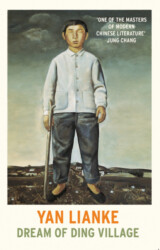
Officially censored upon its original Chinese publication, Dream of Ding Village is Chinese novelist Yan Lianke’s most important novel to date. Set in a poor village in Henan Province, it is a deeply moving and beautifully written account of a blood-selling scandal in contemporary China.
As the book opens, Ding Village’s town directors, looking for a way to lift their village from poverty, decide to open a dozen blood-plasma collection stations. The directors hope to drain the townspeople of their blood and sell it to the villages near and far. Although the citizens prosper in the short run, the rampant blood selling leads to an outbreak of AIDS and a huge loss of life. Based on a real-life blood-selling scandal in eastern China, Dream of Ding Village is the result of three years of undercover work by Yan Lianke, who was an assistant to a well-known Beijing anthropologist studying a small village decimated by HIV/AIDS as a result of unregulated blood selling.
Dream of Ding Village focuses on one village, and the story of one family, destroyed when one son rises to the top of the Party pile as he exploits the situation, while another is infected and dies. The result is a passionate and steely critique of the rate at which China is developing- and what happens to those who get in the way.
'A brave, dark and poetic account of modern Chinese malaise... Yan Lianke proves himself not only as a writer of political vision, but also one with a unique narrative voice... Yan Lianke's true story based prose combines an oral storytelling tradition with daring experiment - something rare in contemporary Chinese literature. I urge anyone interested in modern China to read this book.' Xiaolu Guo, author of A Concise Chinese-English Dictionary For Lovers
'Lianke's brazen, unflinching portrayal of a community in the throes of collapse makes for a brilliant and harrowing novel.' Publisher's Weekly
‘His lyricism of despair, full of frenzied life, even when there is foam on lips, gives this novel of Yan Lianke it’s atrocious grace.’ Le Monde
‘Yan Lianke denounces an alarming situation… his novel is a true revelation.’ Rolling Stone
‘A sorrowful but captivating novel about the price of progress in modern China. The book, which was censored in that country, builds to an act of violence that resonates with the impact of Greek tragedy or Shakespearean drama.’ Kirkus Reviews
‘With great humour, Lianke describes the group of ‘nearly-deads’ reviving the heart of the school, where they have gone to avoid contaminating their nearest and dearest, a collectivist enterprise that is a revealing mirror of Chinese society. An archaic, gangrened society where the absurd goes hand in hand with the tragic, where one does business in marriages between the dead while respecting the local bureaucracy’s orders, where making love before dying seems to recreate utopia. A tender story that cuts to the bone.' Transfuge
'Appearing in English at last, the banned Chinese novel Dream of Ding Village, by Yan Lianke is a furious satire of capitalism and corruption' Guardian
‘The novel is gripping, swift, heartfelt, occasionally exhilarating and often surprising, due in large part to the book's two big aces: the charming, naïve narrative voice of the dead boy and the dynamic, larger-than-life figure of grandpa, the central character and the only morally grounded citizen of Ding Village.’ Shelf Awareness
'Yan is clearly making a statement about the personal and spiritual prices paid for China's runaway development.' Lionel Shriver
'It reads like a fable, unmoored from time… Translator Cindy Carter has found a commanding English voice to accommodate Yan’s fluent dialogue, lyrical descriptions of nature, and melodramatic turns. Yan’s prose amply captures his outrage. Above all, it offers a window into a world American readers rarely see — in which, for example, AIDS sufferers defy death by boasting of how many steamed buns they can eat. In the end Dream of Ding Village works both as a horrifying social critique and, strange to say, as a perversely gripping Gothic tale. This novel delivers not only a front-lines message from Henan Province but also news of Yan Lianke’s skill as a messenger.' Boston Globe
“Dream of Ding Village paints a riveting and disturbing portrait of village life in the grip of epidemic. It's not a pretty picture. Chinese filmmakers, writers and artists of the post-Mao era often manifest in their work an almost visceral abhorrence for the peasantry mixed with compassion and despair. With Yan Lianke, it's personal. A native of Henan, Yan made seven visits to one such '’AIDS village’ there in 1996 in the company of a medical anthropologist. It was a story he had to tell….Dream of Ding Village is powerful and peerless.' Sydney Morning Herald
'A powerful look at the AIDS scandal in Henan Province during the 1990s, when many people became infected with HIV after selling their blood at private collection centers. Yan’s evocative novel focuses on one family at the heart of the tragedy in the fictional Ding Village. Ding Hui grew rich buying blood from the villagers and exposed many to HIV by reusing needles. Hui’s father, Shuiyang, believes Hui should take responsibility for the illness that has swept the village, but even the murder of his young son doesn’t sway Hui. Hoping to atone for Hui’s crimes, Shuiyang gets permission to use the school as a hospice for the many sick villagers. What starts out as an idealistic experiment in which the infected villagers work together to make their lives easier crumbles before Shuiyang’s eyes as the small community is plagued by theft and a corrupt duo who seizes power, while Hui continues to prey on the villagers by selling them coffins donated by the government. Communist ideals battle against capitalistic impulses and human nature in this grand, layered novel, a must-read for anyone interested in present-day China.' Booklist Online
'The first paper for my college English course, assigned by an American lawyer teaching in Beijing, was on whether China would see an Aids epidemic in the near future. It was 1992, and more than half of my classmates believed that a disease associated with irresponsible or corrupted lifestyles would not claim China. Yet in less than five years, an Aids epidemic broke out in Henan province (and in many other provinces), a result of a blood-selling enterprise established by government officials and business people, where the practice of reusing needles was common. Tens of thousands of peasants were infected; sometimes an entire village was wiped out. Officially censored upon its Chinese publication, and the subject of a bitter lawsuit between author and publisher, Dream of Ding Village is Chinese novelist Yan Lianke’s most important novel to date. Set in a poor village in Henan province, it is a deeply moving and beautifully written account of a blood-selling scandal in contemporary China. As the book opens, the town directors, looking for a way to lift their village from poverty, decide to open a dozen blood-plasma collection stations, with the hope of draining the townspeople of their blood and selling it to villages near and far. Although the citizens prosper in the short run, the rampant blood-selling leads to an outbreak of AIDS and huge loss of life. Narrated by the dead grandson of the village head and written in finely crafted, affecting prose, the novel presents a powerful absurdist allegory of the moral vacuum at the heart of communist-capitalist China as it traces the life and death of an entire community. Based on a real-life blood-selling scandal in eastern China, Dream of Ding Village is the result of three years of undercover work by Yan Lianke, who worked as an assistant to a well-known Beijing anthropologist in an effort to study a small village decimated by HIV/AIDS as a result of unregulated blood selling. Whole villages were wiped out with no responsibility taken or reparations paid. Dream of Ding Village focuses on one family, destroyed when one son rises to the top of the Party pile as he exploits the situation, while another son is infected and dies. The result is a passionate and steely critique of the rate at which China is developing--and what happens to those who get in the way.' Goodreads.com
'What a dilemma Yan Lianke must pose to his government. He's one of China's most celebrated writers, and among its most censored. In a career that spans 30 years, he's endured the repeated whipsaw of populist praise followed by official penalty. The publication in 2004 of The Joy of Living earned him both his nation's prestigious Lao She literary prize, and his ouster from the Chinese army. Now his scathing novel, Dream of Ding Village, which was banned just weeks after its publication in 2005, has come roaring onto the American marketplace in a vibrant translation by Cindy Carter. Dream of Ding Village begins as Ding Hui, the ambitious son of a local school teacher, persuades the people of tiny Ding village to follow the lead of the other towns in Henan Province and sell their blood for cash. Hui soon becomes a successful "bloodhead," with so many collection stations that when he runs short of supplies, he simply re-uses the needles and cotton swabs. The people of Ding village sell enough blood that they get wealthy. And then they get AIDS.
Grotesque as it sounds, the set-up is rooted in the Chinese blood-selling scandal of the mid-1990s. In a government-sanctioned scheme, hundreds of thousands of residents in rural Henan Province sold their blood for eventual resale to international pharmaceutical companies. Unsafe medical practices led to an AIDS epidemic, unofficially estimated at close to one million cases.
Lianke, a native of Henan Province, plays with farce and satire and allegory as he spins his dark tale. His description of what has been lost is as mesmerizing as his critique of those to blame is merciless.'
Barnes & Noble
'A powerful and shocking piece of work' The Big Issue
'One of the most prolific and bravest authors to come from China, brings us a disturbing chronicle of one village’s deterioration caused by ‘the spreading fever’'
Guardian
'Dream of Ding Village, is his fictional account of one of China’s most catastrophic cover-ups: the notorious blood selling scandal and subsequent Aids epidemic of the mid-1990s, when commercial companies, nicknamed ‘blood-heads’, cajoled peasants into flogging their blood for cash….. A grotesque parable of the dire consequences of China’s capitalist love affair and unrestrained development'
Independent
Constable UK
Editions Philippe Picquier France
Text Australia
Editora Record Brazil
Ullstein Germany
Font Forlag Norway
Grove Atlantic USA
Nottetempo Italy
Tiderne Skifter Denmark
Riva Bulgaria
Kinneret-Zmora Israel
Automatica Editorial Spain
Bokförlaget Atlantis Sweden
Editura Allfa Romania
Teodolito Portugal
Kawade Japan
Material: Chinese, French and English editions (238pp).

Banned in China.
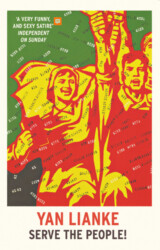
Serve the People! is the sexy, satirical sensation chronicling a love affair between the wife of a powerful Communist army commander and her household’s servant – a remarkable, profound and deliciously comic satire on Mao’s famous slogan and the political and sexual taboos of his regime, by one of the most important authors writing from inside China today.
Liu Lian, the young, pretty wife of a powerful Red Army Division Commander is left to idle at home while her husband furthers the revolution. In her boredom she begins to toy with the household servant – Wu Dawang, a conscientious and exemplary soldier – and decides to set a new rule. Whenever the household’s SERVE THE PEOPLE! sign is removed from it’s normal place on the dinner table and placed elsewhere, Wu Dawang is to stop what he is doing and attend to her needs upstairs. He dutifully vows to obey her instruction.
As life is breathed into the illicit sexual affair, Yan Lianke brilliantly captures how the model soldier becomes an eager collaborator with the restless and demanding Liu Lian, their actions inspired by primitive passions that they are only just discovering. The short affair culminates in three days of ravenous lovemaking, the peak of which is an evening in which the lovers compete to see who can prove themselves the most counterrevolutionary by destroying the compound’s most sacred Communist icons.
This fetishistic love story and insolent variation on the official History may have been banned in China but managed to find a huge audience on the internet, and gained praise as a subversive critique of official corruption, leadership hypocrisy and the insanity of the Cultural Revolution.
‘Drips with the kind of satire that can only come from deep within the machinery of Chinese communism. Eschewing broad comedy, Yan barbs the text with enough social criticism to receive a priceless blurb from the Central Propaganda Bureau.’ Financial Times
'Crackles with sexual tension as Yan Lianke peels back Mao’s revolution to reveal the broad vein of humanism that overcame the revolution.’ Patrick Tyler, former Beijing bureau chief, New York Times
‘A savagely funny satire of revolutionary politics and corruption, written in prose as crisp and lovely as its barbs are sharp. A red hot love story that also offers real insight into the Chinese language and imagination, Yan’s new book is a festive banquet of old-school sloganeering and modern temptation.’ Rachel Dewoskin, author of Foreign Babes in Beijing
'Lianke spares no one . . . 'Serve the People!' is a wonderfully biting satire, brimming with absurdity, humor and wit . . .the novel is exuberantly drawn in several shades of revolutionary red.' LA Times
'This passionate satire of clandestine, intimate privilege in an ostensibly classless, egalitarian society is exceedingly carefully written, so that it is at once funny, sad, and bitterly ironic on nearly every page. Oh, and sensual, too.' Ray Olson, Booklist (starred review)
‘A very funny, and sexy, satire’ Independent on Sunday
Ullstein Germany
Einaudi Italy
Japan (all Yan’s books published)
Editions Philippe Picquier France
Podium NL
Constable & Robinson UK
Text Australia & New Zealand
Grove Atlantic USA
Record Brazil
Kinneret Israel
Imprimatur Serbia
BB Art Czech Republic
Polirom Romania
Maeva Ediciones Spain
Teorema Portugal
Font Forlag Norway
Aschehoug Forlag Denmark
Riva Bulgaria
Bungei Shunjyu Japan
Material: Finished copies of English, French and many more (228pp).