olivia fane
Olivia Fane

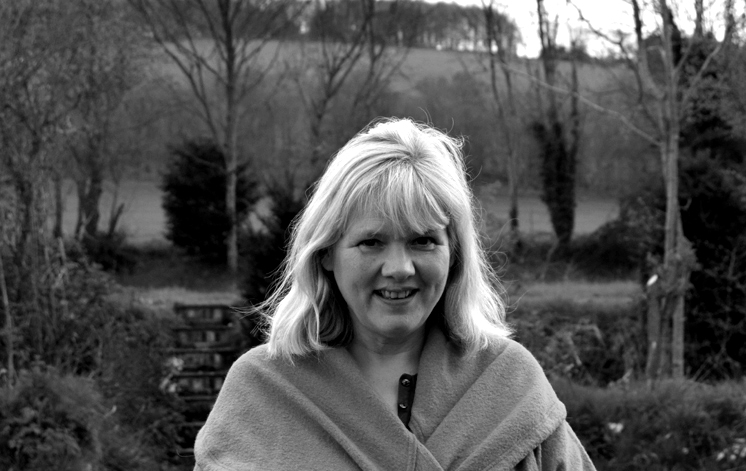
OLIVIA FANE has endured one divorce, married two husbands, been awarded three M.A.s in Classics, Social Work and Theology, written four novels, and given birth to five sons. She lives in Sussex. Fane’s combination of intellectual ideas and clear, involving prose won her a Betty Trask Award for LANDING ON CLOUDS, and drew comparisons with Iris Murdoch.


‘Disturbing, shrewd, funny - a most impressive debut.’ Victoria Glendinning


'Fane writes with clarity, elegance and a wit which raises her interest in amorous foreplay into the Ovidian. Her debut is the most radiant I have seen this year' Amanda Craig, The Independent


‘Brings to mind comparisons with Shena Mackay, and, in her hero’s philosophical quest, with early Iris Murdoch.’ Claire Colvin, The Times
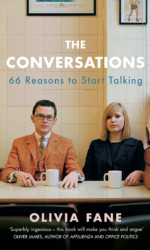
THE CONVERSATIONS: 66 Reasons to start talking
The Conversations

‘Superbly ingenious – this book will make you think and argue’ Oliver James, author of Affluenza, Office Politics and They F*** You Up

We have all known the heady thrill of a conversation that goes on all night. Once we had opinions on everything but as life becomes more humdrum we often lose that passion. Sometimes we can’t remember what we really think at all.

This brilliant book encourages us all to think anew. Olivia Fane provides the starting points for 66 conversations to be had with a partner, friend, stranger, or simply ourselves. These thought-provoking and provocative short discussions on happiness, vanity, infidelity, education and more, ask you the questions that will help you get to know those with whom you share your life.

Whether you agree, or vehemently disagree, THE CONVERSATIONS provides endless food for thought and a surprising window into some of the big subjects that define who we are and how we live.

'This book is so unusual, and so good, that I want to spend as much time as possible just quoting it. But first it needs a little explanation.

Olivia Fane is a novelist. Her work, which has an almost dreamlike clarity, is not as well known as it should be. Nevertheless, there are some problems with her novels which are due, I think, to difficulties of construction. This book is something else. It is not fiction, and its form is part of its success.

Subtitled “66 Reasons to Start Talking”, the book follows the author’s own love of conversation and asking questions. For her, this is a semi-erotic quest. She points out thateros– the Greek word for love – “etymologically is closely connected to the Greek word to 'ask questions’ –erotao”.

The range of subjects, each contained in a short chapter, is indicated by the chapter titles – they include “On fame”, “On being loved”, “On being locked in the lavatory”, “On Saxons and gypsies”, “On socialism”, “On jewellery”, “On snogging”, “On mirrors” and “On death”. The presentation is that of a self-help book. At the end of each chapter, the author asks a series of questions which people might want to debate to improve their self-understanding. Thus the chapter “On parties” (which the author, despite her desire to talk, has always found difficult) ends by asking “Is your partner relaxed when you dance with someone else?” and so on.

But most self-help books, even when useful, are not very interesting. They try to codify the almost obvious, and they tend to suggest that things are easier than they actually are. This book is quite magnificently unexpected. Although it is direct, usually cheerful and often extremely funny, it fair boggles the mind.

First of all, there are the author’s own autobiographical anecdotes. As a teenager, she loved the bit in Far From The Madding Crowd when Bathsheba sends a valentine to Farmer Boldwood that says “Marry me”. Fane conceived the longing to go up to people, say “Kiss me” and “see what happened next”. Once, she did it to a bewildered skipper (“he wasn’t even my type”) in a yacht in a Force 9 gale. On another occasion, she did it to a man who was sitting opposite her in a library. He later married her.

She was, for some time, a probation officer, and she hated the official doctrine that you should “respect the language of your pupils” so as not to undermine their confidence. She thought that this ghettoised them (“Blow your working-class identity!”), so she taught them her version of upper-class manners. She made them “sit tall and enunciate their vowels”. She also got them round the table pretending to be the Cabinet and making decisions about how best to rule the country (like all criminals, they were very keen on fierce punishments for crime). None of them reoffended, she claims.

When she was six, Fane came across a small phial of poison in her father’s desk. He had been given it as a pilot in the Korean War, to kill himself in an emergency. Two weeks later, her mother was shouting at her to hurry up because they had to go to the dentist. Young Olivia had lost her shoes, and she did not want to confess. So she went to her father’s drawer to find the phial (“Death was the only option”). “Unfortunately,” she writes, “the poison was gone.” That word “unfortunately” indicates Fane’s strange genius. Anyone else would have written “fortunately”.

What is she trying to teach? It is something to do with the liberating effect of finding a different way of looking at the world. When she was a child, for instance, her brother would lock her in the lavatory quite often. It had no books or pictures to divert her. But then she noticed a dead fly. She found it fascinatingly ugly, and wondered why: “What did 'ugly’ mean, anyway? Was a human being any less ugly?”. She considered this question, studying her own body – the skin with “its little blonde hairs growing out of tiny holes”. Then she read the contents of the bottle of Harpic and began to think about language, who makes it up, and why. “One and a half hours passed in a jiffy.”

Here are some other things she says. Smacking children is better than long, “humane” punishments, because such punishments have “a dreadful heaviness” and “eat into time”. If you are bullied at school, the way to overcome it is to imagine yourself as an alien from another planet who is conducting a study into the weird, cruel behaviour of human beings: each torment you suffer then becomes a fascinating addition to your research.

She thinks the Green desire to save the planet for the sake of a distant future goes against human nature: at school her class were asked whether they wanted three hours of painful dentistry now or amputation at 75: “We all chose the amputation.” Besides, she adds, there is a real moral dilemma: “How are we to tell one billion Chinese people that they oughtn’t to have washing machines?” Sometimes she is really aphoristic: “If there is too strong a connection between yourself and the person in the mirror, you will only know loss.” Or: “If free will really does exist, it’s a miracle.”

Behind it all, Olivia Fane’s subject is love. Although she is interested in love in all its forms, and although her first marriage failed, her greatest interest is in conjugal love, because “you love over time”. Whereas, in the ages of man, she says, the world descended from gold to silver to bronze, “In marriage we proceed from paper and cotton, to silver, gold, rubies and diamonds.” The Sunday Telegraph

'Olivia Fane’s latest book is a part autobiographical, part philosophical work. The concept is that each of her 66 short essays provides a starting point for better conversation. Something about the sparse cover and the book’s worthy stated intention makes it look suspiciously like a companion to therapy – but therapy is not what she’s preaching: ‘the knowledge base of therapy seems so random to me...I’ve always had a sceptical nature’. Instead,The Conversationsis a playful look at life through another’s eyes; fans of Alain de Botton and Jules Evans will approve.

At the end of each essay, Fane poses a selection of questions. At first this gives the book a slightly ‘Conversation for Dummies’ feel, but it’s a clever tool. By overtly prompting her readers to embark on introspection so frequently, Fane can frame her thoughts without agenda. It’s like sitting next to an entertaining aunt at a dinner party: one who doesn’t beat you into submission with her views when an objection is voiced.

And if it seems self-regarding for Fane to focus so much on the ‘I’ of her experience, as you progress you realise that’s exactly the point. By revealing her own quirks and intricate family foibles, Fane leaves you free to speculate without judging yourself: she has gone ahead, and it’s not all pretty. She doesn’t care whether you like her or not.

Occasionally it is frustrating that certain essays are not more developed in their intellectual scope, but they fulfil their brief perfectly: as aide-memoires to better human interaction. The charisma of her writing will certainly win her allies, but Fane doesn’t try to impose her belief system on her readers. You will read the book in a single sitting and dip back into it for years to come.' We Love This Book/The Bookseller

‘Full of wisdom about how to live, what it means to be you and how to communicate that knowledge to the people you love.’ Andrew G. Marshall, author of I Love You But I’m Not in Love with You

Sales

Square Peg/Random House UK (publication Spring 2013)

Nieuw Amsterdam NL

Droemer Knaur Germany

Material: final text.

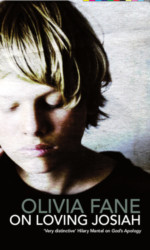
ON LOVING JOSIAH
Fane

Glorious, passionate, beautiful, uncontrollable Eve is in her early twenties when she checks herself into a mental institution following a series of dramatic events. There she meets Gibson, the gardener who blossoms in Eve’s presence, and, despite the protestations of parents and social workers, they marry. They have a son, Josiah, and bring him up in an unconventional idyll.

But Eve’s determination to home school him brings her to the attention of social services again and her beloved boy is removed from her, her husband collapsing under the strain. Eve reacts by going on an arson spree and is forced to leave the country. Josiah, in a children’s home in Cambridge, meets a professor of Classics and the two form a close bond. They head off on a blissful trip to Italy, but on their return, the professor is arrested and imprisoned on suspicion of abuse. It is left to Josiah’s mother, the irrepressible Eve, to return from her exile to save her son and his friend – and herself.

A deeply moving, highly entertaining tale of family, love, loss and the limits modern society imposes, ON LOVING JOSIAH is also a brilliant satire, full of wisdom and insight. This is Olivia Fane’s best novel to date and it will win her even more acclaim.

'Far more than creating a tale of pedophilic scandal, Fane unearths thorny moral ambiguities, forcing the reader to consider circumstances in which the unthinkable may be the only sound option.' Publishers Weekly

'A contentious subject, thoughtfully tackled' Daily Mail

Sales

Maia Press, an imprint of Arcadia, World English

Nieuw Amsterdam NL

Material: finished copies (315pp).

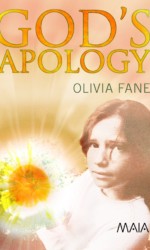
god's apology
God's Apology

The third novel by Olivia Fane, who won a Betty Trask award and an Arts Council Award for her first novel, LANDING ON CLOUDS.


Patrick German has achieved all his life's ambitions: a lovely wife, a baby son and a prestigious job in publishing. So when, one day, he walks out on all he knows and loves, he is as perplexed as anyone. He runs away to become a primary school teacher in north Norfolk, where he is mesmerised by a ten-year-old girl in his class, Joanna, who has an otherworldly authority about her, possibly even divine. Could she be?


'A very distinctive novel.' Hilary Mantel


'This extraordinary story is told very readably. There is a good spicing of satire and humour. Besides being a good tale, God’s Apology is something of an essay in natural theology.’ The Tablet


Sales

Maia Press UK


Material: finished copies (240pp).

the glorious flight of perdita tree
The Glorious Flight Of Perdita Tree

Perdita Tree, the dangerously bored and irresistibly beautiful wife of an MP is kidnapped in Albania. Adored by her kidnapper, Alfred, who believes all things English are perfect, she is persuaded to rescue the Albanians from their dire history, and is vain enough to imagine that she can. The year is 1991, democracy is coming, but are the Albanians ready for it? And are the Albanians ready for Perdita? A beguilingly simple story which considers the nature of love, longing and betrayal, and, above all, the art of being free.


'This book is a delight. I loved it. It is an extremely serious novel, posing as one which is simple and beguiling. It races along at a rate of knots, leaving the reader smiling, satisfied, and impressed.' Fay Weldon


'A captivating book - original, intelligent and very entertaining.’ Isabel Wolff


‘Fane toys with chick-lit conventions, but consistently focuses her smart, fluid prose and sophisticated thought on rendering a thoughtful, sorrowful and often highly amusing novel.’ The Times

Sales

Maia Press UK


Material: finished copies (368pp).